


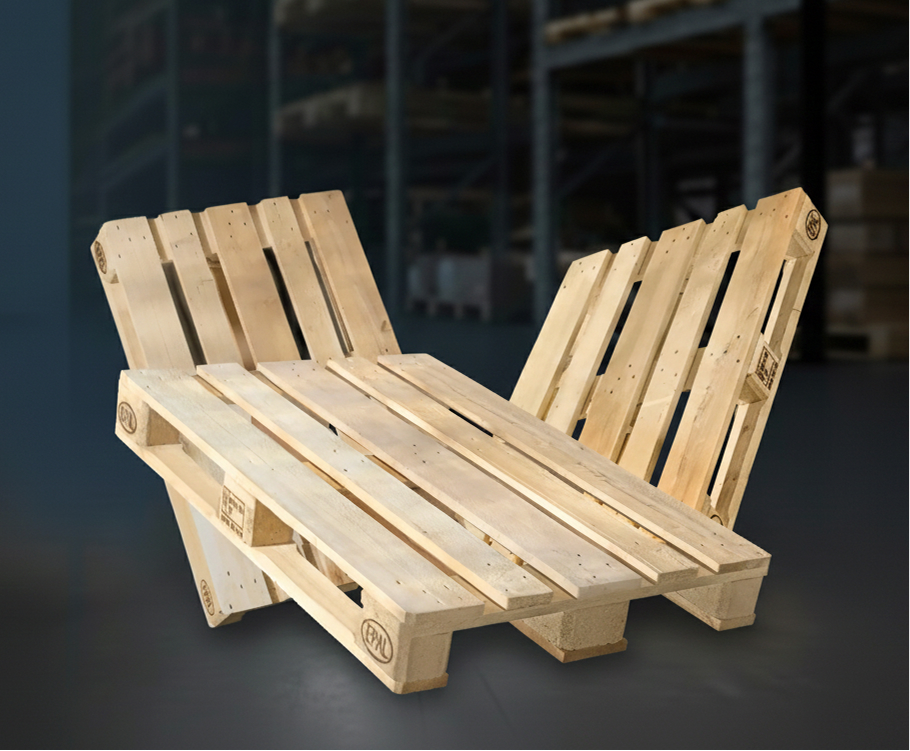

Price overview: How much does a euro pallet cost?
The costs of a euro pallet are among the central calculation factors in many areas of the supply chain. However, prices vary significantly in some cases depending on quality, availability and market conditions. In order to be able to make well-founded decisions, a clear overview of current pricing structures is essential. This article shows which factors determine the price and what typical costs per euro pallet can be realistically expected.
Information: The prices mentioned are typical ranges from practice. The final conditions are always based on your individual circumstances.
Euro pallet definition
The Europallet follows clear EPAL standards and, thanks to its uniform dimensions and robust construction, provides a reliable foundation for the entire logistics process. This standardization is also the reason why prices are easy to compare — the costs differ less by the product itself, but primarily by quality, condition and market environment.
Which factors influence the price?
The price of a euro pallet consists of several individual components. Although construction is uniformly regulated by EPAL standards, quality, market conditions and procurement channels can lead to significant price differences. An overview of the most important influencing factors:
Quality & Condition Classes
Euro pallets are divided into three quality classes, which decisively determine the price:
- Classy new: brand-new, unused euro pallets of maximum quality — bright, clean and without any signs of use.
- Class A: Almost as good as new, clean, bright and barely any signs of wear.
- Class B: Used but well-preserved pallets with slight signs of wear. They offer good value for money and are suitable for belts.
- Class C: Heavily used pallets with significant signs of wear. They are significantly cheaper, but are not suitable for every purpose.
Market & Timber Price Fluctuations
Timber prices and general production costs have a direct influence on the pallet price. If raw material or energy costs rise, the prices of new euro pallets also rise. Short-term price jumps can occur, particularly in volatile market phases.
Number of pieces/quantity discounts
The price per euro pallet depends heavily on the quantity purchased.
- Individual purchases or small quantities are comparatively expensive
- Truck-based deliveries significantly reduce the unit price
Large companies and logisticians therefore often benefit from volume discounts.
Regional differences
Location also plays a role.
Transport routes, regional availability and local provider structures lead to price differences between individual regions. Delivery costs in particular can have a noticeable impact on the overall price.
Buy new vs. used
When you Buy used euro pallets, Benefit from significantly lower prices — while new euro pallets are more expensive, but offer maximum durability and a flawless appearance.
Used pallets are cheaper and more sustainable as they extend the existing product cycle. Even with used pallets, the load capacity is guaranteed. Which route makes more sense depends on the area of application and the quality requirements.
Specific prices: How much does a euro pallet cost?
The costs of a euro pallet vary in price ranges depending on quality, condition and quantity purchased. While individual orders tend to be more expensive, the unit price drops significantly for larger quantities. The following price ranges provide reliable guidance.
New EPAL euro pallet
New EPAL pallets are in the upper price range, as they offer maximum load capacity, clean appearance and full compliance with standards.
- Small quantities (10-50 pieces): approx. 15—22 € per pallet
- Large quantities (from half truck or complete truck): approx. 10—13 € per pallet
The higher the purchase quantity, the more the unit price is reduced, as production and logistics can be planned more efficiently.
Used euro pallets (class A, B, C)
Used pallets are the more attractive alternative in terms of price. The range is mainly derived from the condition class.
Class A (used, very good condition)
- Small quantities (10-50 pieces): 15—18 €
- Large quantities: 9—12 €
Class B (used, good condition — bandable)
- Small quantities (10-50 pieces): 12-15 €
- Large quantities: 7-10 €
Class C (more used, exchangeable)
- Small quantities (10-50 pieces): 11-14 €
- Large quantities: 5-8 €
The price advantage is particularly significant for large quantities, as used pallets are usually available in large quantities.
Rental prices as an alternative
For many companies Rent euro pallets A flexible and cost-effective option — especially during seasonal peaks or project deals.
- Short term rental: approx. 0.10 — 0.25€ per day
- Long-term rental/large quantities: sometimes 0.006-0.04 € per day
Here, it is primarily the rental period and the quantity required that determine the daily price.
Low quantities vs. large quantities: Why prices vary
The price differences between small and large purchase quantities are caused by:
- More efficient logistics for truckloads
- Lower handling costs per pallet
- Better planning in production and warehouses
- Lower transport costs per piece
While small quantities are particularly useful for spontaneous, small requirements, it is almost always worthwhile to step up to a higher purchase stage when it comes to predictable quantities.
Buying or Renting — Which Is More Worthwhile?
Whether it makes more sense to buy or rent euro pallets depends primarily on the length of use and the quantity. The purchase is worthwhile if demand remains the same over the long term — this is where the unit costs are the lowest in the long term. Rent, on the other hand, offers maximum flexibility: Companies can cover short-term peaks, seasonal projects or unsteady quantities without capital commitment. Renting is often the more economical solution, especially when demand fluctuates, lack of storage space or temporary assignments.
Exchange Systems and Pooling
When exchanging euro pallets, in the same condition, are exchanged directly or later for equivalent or inferior pallets — this means that stocks remain stable without constantly having to buy new pallets.
Pallets pooling Systems go one step further: Companies use a common pallet cycle, which reduces costs, shrinkage and administrative costs. At the same time, use is becoming more sustainable.
Additional cost factors
In addition to the pure pallet price, other costs may arise, which vary depending on the provider and requirements. These include in particular transport and delivery costs, which are calculated depending on distance and quantity size. Sorting, repairing or replacing damaged pallets can also result in additional charges. In some cases, there are additional handling or administrative costs, particularly in the case of large or decentralized pallet stocks. These additional costs should definitely be taken into account in the overall planning.
Frequently asked questions about the price of euro pallets
How much does a euro pallet currently cost?
Prices depend on quality, condition and quantity. New EPAL pallets usually cost 10 — 22€, used pallets 5 — 15€, depending on the class. When purchasing larger quantities, the unit price drops significantly, especially for truckloads.
Which factors influence the price of a euro pallet?
The price is determined primarily by quality and condition class, wood and production costs, quantity discounts, regional availability and the decision to buy or use. These factors result in significant price differences between individual providers and regions.
How do the prices differ between new and used euro pallets?
New euro pallets are the most expensive and usually cost between 10—13 € for full truckloads.
Used pallets are cheaper:
- Grade A: €9-12
- Class B: 7—12 €
- Class C: €5-8
The savings are particularly visible with larger quantities.
From what quantity does the unit price for euro pallets drop significantly?
Price advantages often start with small stacks, but become significantly noticeable with larger quantities or entire truckloads. Here, the unit price is sometimes reduced by several euros, as transport, handling and production can be planned more efficiently.
Is buying or renting euro pallets more worthwhile?
Buying is the most economical solution when demand is permanent, constant. The rent is particularly worthwhile in the event of seasonal fluctuations, project transactions or irregular needs, as it offers flexibility without capital commitment.
What additional costs can arise when using euro pallets?
Additional costs often arise from transportation and delivery, sorting, repairs, exchanges or managing large pallet stocks. Depending on the provider and region, these items can make up a relevant part of the total costs.

